
Why Returning to Grand Theft Auto: San Andreas Is a Unique Delight
Returning to Grand Theft Auto: San Andreas reveals its unique charm that stands in contrast to the modern design of GTA V. The game's quirks enhance the experience and offer nostalgia.
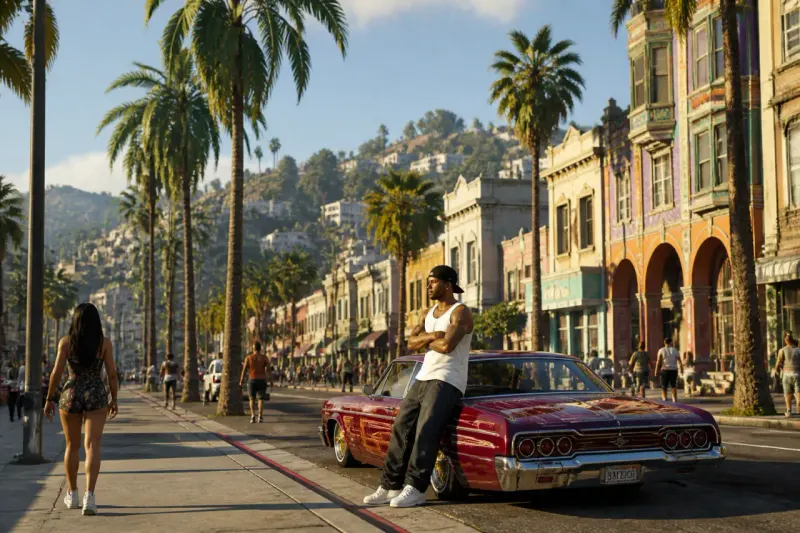
Grand Theft Auto: San Andreas, released in 2004, has become an unexpected delight for players revisiting its odd charm in the wake of the highly acclaimed Grand Theft Auto V. The game's peculiarities and design limitations create a unique experience that has made it both memorable and surprisingly resonant even today.
The Enigmatic Charm of San Andreas
One particularly striking element of San Andreas is its setting, which is a blend of fictional cities based on real-life locations in California and Nevada. Players find themselves immersed in a world that feels expansive yet oddly contained, as they navigate between Los Santos, a parody of Los Angeles; San Fierro, reminiscent of San Francisco; and Las Venturas, echoing Las Vegas. Despite its relatively simple graphics and sparse detailing compared to newer titles, the game possesses an aesthetic that captures the essence of California's bizarre landscapes.
Exploration Beyond the Expected
The freedom to explore in San Andreas is amplified by the game's structure, which allows players to break away from the main quests. An exhilarating moment occurs during an early mission, where players can steal a plane at Los Santos Airport. This ability to venture off the main narrative not only showcases the game's ambition but also evokes a sense of nostalgia and excitement—echoing the audacity of open-world gameplay.
Comparing Landscapes: Then and Now
Those familiar with Grand Theft Auto V may find themselves struck by the contrast in presentation when returning to San Andreas. The recent remasters highlight how San Andreas presents its world as a "dinkytown," filled with simplified representations of iconic structures. Los Santos, seen from the air, resembles a collection of toys rather than a vibrant metropolis. The less detailed landscapes evoke a dreamlike quality, emphasizing a sense of place that contributes to the game's quirky charm.
Urban Layout and Atmosphere
San Andreas' condensed urban environments feel both claustrophobic and oddly intimate. For instance, the Hollywood sign—standing close by in the game's parody of LA—invites players to touch it, a proximity not experienced in real life. The reduced representation of downtown Los Santos, with only select buildings included, evokes an almost sepulchral dignity, contrasting the sprawling views of modern urbanism.
Limited Yet Lively
What makes the cities of San Andreas particularly enchanting is their limitations. The stark structures and minimal traffic create a surreal atmosphere, marked by sparse ambient sounds. The game captures a version of LA that is less of a realistic portrayal and more an abstract interpretation of the city's identity—from the striking palm trees under deep red night skies to the notable absence of lifelike detail. This distinct experience begs for appreciation as players witness the limitations that somehow enhance the narrative's immersion.

Capturing the Essence of California
San Andreas perfectly encapsulates the peculiarities of Southern California's vast spaces, where the line between urban landscaping and natural wilderness blurs. The game invites exploration beyond beating missions; players can easily lose themselves traversing the region—from small towns to vast valleys, all while tuned into the in-game radio playing classic tracks like "All My Exes Live in Texas." This freedom amplifies the experience, allowing players to discover the game’s secrets.
Grove Street’s Resonance
The sense of place within San Andreas shines particularly bright in Grove Street, where players start their journey. In contrast to the grandiosity of GTA V, this neighborhood offers a true sense of belonging. As players traverse through its streets, learning to engage in everyday activities like eating, clothing changes, and street art, they forge a connection to their environment. This is the essence of San Andreas: a feeling of home that resonates deeply with players.
A Nostalgic Return Amidst Modernity
Returning to Grand Theft Auto: San Andreas is not simply about revisiting a classic; it is an exploration of design philosophy and nostalgia. Unlike the meticulous detailing of GTA V, San Andreas thrives on its oddities and limitations, offering a refuge that feels both familiar and comfortably strange. In a gaming landscape continuously evolving towards hyper-realism, the charm of this classic takes on a whole new light, proving that sometimes, simplicity breeds delight.
Key Takeaways
- San Andreas offers a quirky charm amplified by its limitations.
- The game presents a blend of fictional cities that mirror real Californian locations.
- Players can explore off the main path, enhancing the sense of adventure.
- Grove Street serves as a nostalgic home base, grounding players in the experience.
- The game’s aesthetic invites appreciation for its uniquely odd take on California.
Frequently Asked Questions