
Google's Hollywood Deals: AI's Future in Filmmaking
Google is pursuing licensing deals with Hollywood studios to train its AI on copyrighted content. This strategy aims to reshape the narrative around AI in film production.
Overview of Google's Plans with Hollywood
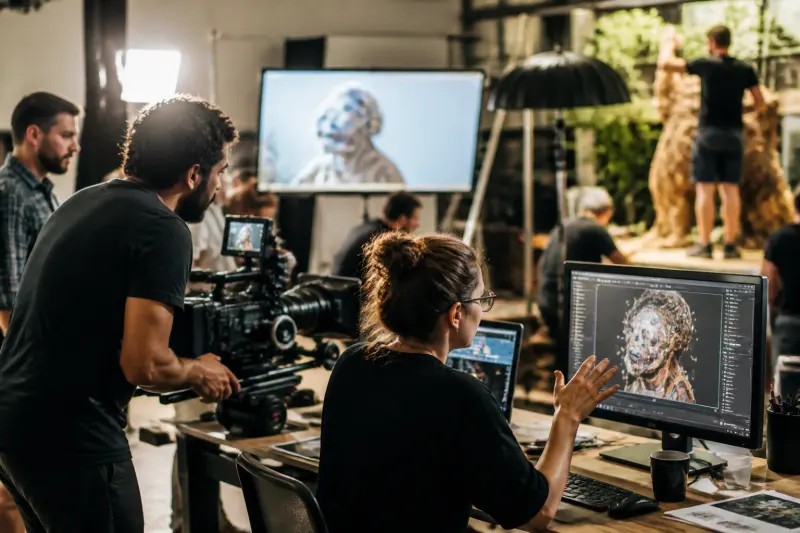
Google is in pursuit of deals with some of Hollywood's largest studios, including Disney, Warner Bros. Discovery, and Universal, aiming to secure licensing agreements that would allow its artificial intelligence (AI) models to train on copyrighted content. With reports indicating that Google is willing to pay hundreds of millions of dollars for these rights, the initiative marks a critical pivot for the tech giant, seeking to enhance its AI capabilities while simultaneously persuading the entertainment industry to adopt AI tools amidst public skepticism.
The Potential Windfall for Studios
- Disney/Pixar Deal Insights: Google is reportedly considering payments around $40 million for rights to generate content featuring individual copyrighted characters.
- Advertising Revenue Sharing: Studios could also benefit from a portion of the advertising revenue generated from AI-created content using their intellectual properties on platforms like YouTube.
- Financial Implications: As negotiations progress, the overall financial investment from Google could escalate to billions, depending on the breadth of characters included in licensing agreements.
Risks for Hollywood Studios
Despite the appealing financial incentives, entering into partnerships with Google also entails significant risks for studios. Amid a backdrop of growing public concern about AI technologies and their societal impacts, studios face the possibility of backlash. Engaging in these deals might lead to public disillusionment if audiences perceive a betrayal of traditional production methods.
There's a history of disappointment where AI involvement became publicly known, such as the reactions to Spider-Man: Brand New Day, where fans expressed dissatisfaction when AI-generated images appeared in promotional materials.
Strategies for a Positive Narrative
To mitigate potential backlash, working with studios would not only help Google enhance its AI portfolio but also strive to shift the public discourse surrounding AI. By partnering with esteemed franchises, the tech company aims to reinforce the legitimacy of its AI technologies and counteract negative perceptions.
Collaboration with well-regarded studios would project an image of AI as a beneficial tool rather than a disruptive force, helping the public view generative AI more favorably. This is vital in a landscape where growing uncertainty about AI's future pervades.
The Impact on Creative Output
The content generated through these collaborations is expected to surpass the quality of current outputs from models trained on questionable data. Google's association with respected brands would not only boost acceptance but could also enhance the artistic and commercial quality of AI-generated content.
Moreover, embedding Google branding on official AI-generated media could serve to normalize AI technology's role in film and TV production, providing an avenue for audiences to engage with AI-created stories that are backed by trusted studios.
The Road Ahead for AI in Entertainment
While Google pushes toward legitimizing its AI initiatives, the framework for integrating AI into film-making processes raises questions about labor displacement. If studios lean heavily on AI for production, this could significantly reduce the number of creative jobs available, creating a dichotomy between technological enhancement and workforce sustainability.
With shareholders eager for cost-cutting and efficiency, the allure of AI's potential to speed workflows and reduce production costs presents a compelling, if contentious, proposition. This could not only accelerate the timeline for film releases but also challenge the existing labor structure within the entertainment industry.
Future Collaborations and Developments
As Google embarks on its quest to collaborate with Hollywood, the future could see a hybrid model where studios either incorporate AI tools that enhance productivity or present AI-generated content prominently. A key instance is Lionsgate's previous agreement with Runway, which aims to produce AI-generated shorts, illustrating the possibilities ahead.
Yet, the hesitation among major studios such as Disney stems from the potential ramifications of public backlash against perceived overreliance on AI in creative processes. The urgency to secure partnerships with Google may spur one of them to take the plunge, potentially setting precedence for other entities in the landscape.
Key Takeaways
- Google is reportedly negotiating licensing agreements with top studios for AI training access, targeting payments of hundreds of millions.
- Successful partnerships could secure $40 million per character for studios, translating into billions depending on the scope.
- While financial benefits abound, studios must navigate public concerns about AI and labor impacts.
- Collaborative projects aim to cement generative AI's viability in entertainment, steering public opinion toward acceptance.
Conclusion
The dance between Hollywood and Google signifies a critical juncture. As the tech giant navigates its aspirations to integrate with the entertainment sector, the cautious approach from studios underscores that while AI presents ample opportunities for innovation and profit, the path is fraught with potential pitfalls. The decisions made in the coming months will shape not just Google’s position in the AI market but also the future dynamics within the film and television industries.
Frequently Asked Questions