
Asteroid Shapes Present New Challenges for Deflection Techniques
Asteroids present unique challenges for deflection due to their irregular shapes. Recent research outlines new nuclear techniques and modeling improvements to address these issues.
Introduction to Asteroidal Deflection Challenges
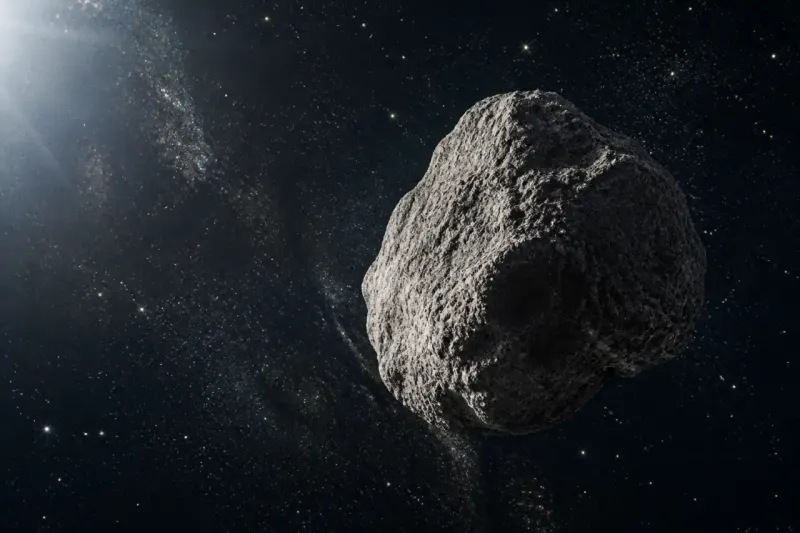
Asteroids are not just rocky bodies floating through space; their diverse shapes pose significant challenges to humanity's ability to defend itself against potential collisions. With billions of years of evolution and interactions, asteroids have developed uneven and irregular shapes, making precautionary measures such as deflection complex. NASA's Double Asteroid Redirection Test (DART) and subsequent missions highlight the emerging threats posed by these celestial objects and the necessity of mastering deflection techniques.
DART Mission and Its Implications
The DART mission revealed the success of using a kinetic impactor to change an asteroid’s trajectory. However, this technique only addresses asteroids detected well in advance. Should an asteroid be on a collision course with Earth and largely undetected until shortly before impact, alternative methods must be explored. One such method includes utilizing a nuclear weapon not to destroy, but to redirect an asteroid through the use of an x-ray pulse.
Understanding Asteroid Geometry
Asteroids come in various shapes and sizes because they lack the mass necessary to become spherical like planets. This variance impacts deflection strategies significantly. A recent study published in Icarus focused on the intricate relationship between an asteroid’s shape and its response to energy pulses. According to the authors, including physicist Nathan Moore from Sandia National Laboratories, the effectiveness of deflection methods hinges critically on the surface topography of the asteroid itself. Asteroids’ irregular geometries lead to challenges in predicting deflection outcomes, complicating the approach for future deflection missions.
The Nuclear Approach to Deflection
Recent alternative methods propose using nuclear detonations near asteroids to achieve deflection through radiation pulses. This stand-off X-ray mitigation scenario employs a nuclear pulse, strategically detonated away from the asteroid's surface, to steer its trajectory with minimal disruption to its structure. This method minimizes the risk of creating debris that could lead to further hazards for Earth.
How Energy Pulses Work
When a nuclear weapon detonates in proximity to an asteroid, an intense x-ray pulse is directed at one side of the asteroid. This initiates several reactions:
- Surface Vaporization: The pulse causes rapid vaporization of the asteroid surface, which generates the force needed to redirect it.
- Internal Shock Waves: Following vaporization, powerful shock waves travel through the asteroid, fracturing its structure.
- Debris Displacement: Fracturing may result in chunks of the asteroid being propelled away from the blast zone, adding a complex layer to the deflection strategy.
This chain of events demonstrates how important an asteroid's shape is during deflection operations. The angle and surface facing the radiation at the moment of impact can yield vastly different deflection outcomes.
Asteroid Comparison for Deflection
| Asteroid | Shape Variation | Deflection Velocity Increase |
|---|---|---|
| 101955 Bennu | Irregular | Up to 2× |
| 25143 Itokawa | Oblong | Up to 4× |
| 6489 Golevka | Aspherical | Up to 5× |
This table demonstrates that the orientation at impact plays a significant role in determining the deflection velocity achieved. For instance, Golevka’s odd shape could theoretically enhance deflection speed significantly more than that of Bennu.

Advancements in Simulation Technology
The complexities surrounding asteroid shapes demanded advanced simulation tools to predict deflection outcomes accurately. Moore and his team developed a new algorithm, which outperformed prior models by being over 1,600 times faster at calculating deflection based on surface geometry. This enhancement allows researchers to incorporate three-dimensional surface models based on actual asteroid topography, accounting for irregularities that complicate deflection modeling.
Implications for Future Missions
The implications of this research extend beyond theoretical discussions. Asteroid deflection strategies must reconcile irregular asteroid shapes with the potential for effective response techniques. Moore anticipates that their model can serve as a foundational tool for future missions designed to determine the most effective timing, distance, and energy to employ against incoming Near-Earth Objects (NEOs).
Future Directions and Recommendations
Practical implementation of these findings will involve further research aimed at mapping asteroids more accurately, employing high-resolution imagery from spacecraft, or even deploying phased combined spacecraft capable of both mapping and deflecting.
While deploying nuclear weapons in space presents geopolitical challenges, advancements in modeling now provide a clearer understanding of how to target these celestial bodies effectively. The critical message from Moore’s work is clear: accurately identifying the orientation and surface geology of an asteroid in advance can drastically improve the success of deflection missions.
Key Takeaways
- The irregular shapes of asteroids complicate deflection strategies.
- Nuclear detonation methods may allow precise asteroid redirection via x-ray pulses.
- Asteroid shape can impact deflection velocity by as much as 5×.
- New algorithms aid in accurately predicting deflection outcomes based on three-dimensional simulations.
- Better mapping of NEOs can significantly enhance deflection effectiveness.
Conclusion
As space agencies prepare for potential asteroid impacts, understanding and addressing the complexities of irregularly shaped asteroids will be paramount. The nuances unveiled through recent research not only highlight the need for precise targeting in deflection strategies but also underscore an urgent call for better asteroid mapping technologies. If humanity is to defend against future impacts effectively, a concerted effort in research and preparation is essential. Time is of the essence, and understanding these celestial dynamics may one day safeguard our planet from extinction-level events.
Frequently Asked Questions