
10 Transformative Apple Products Under Tim Cook's Leadership
Explore the evolution of Apple products and features under Tim Cook's leadership, highlighting significant innovations and expansions in Apple's ecosystem.
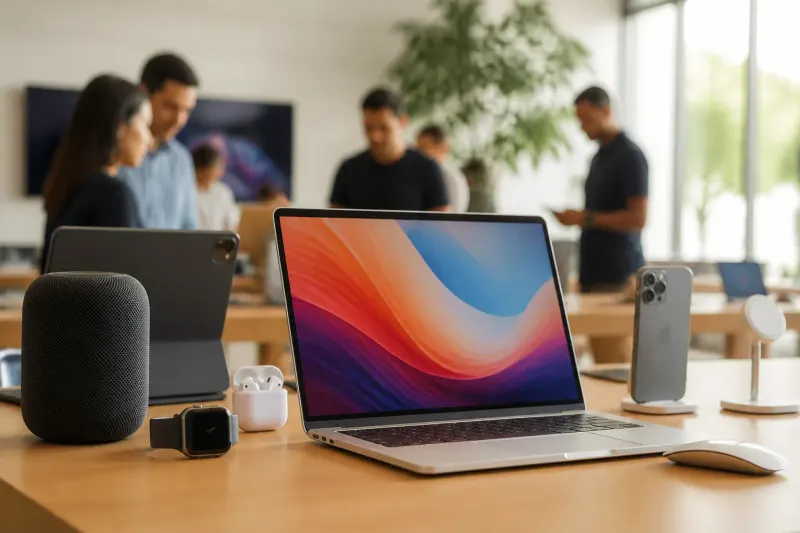
Since taking over as CEO of Apple in 2011, Tim Cook has transformed the company, steering it to new heights while redefining how consumers engage with technology. Under his leadership, Apple has introduced groundbreaking products and features, expanding its market presence and introducing a more integrated ecosystem. This article explores 10 Apple products and features that changed significantly during Cook’s tenure, shaping the way users communicate, work, and manage their daily lives.
1. The Apple Watch's Evolution Beyond Notifications
The Apple Watch, originally launched in 2015, began as a simple companion device for iPhone users, facilitating notifications and basic communication. The device quickly evolved, especially with the introduction of the Apple Watch Series 2, which brought features like built-in GPS and swim tracking. The pivotal shift, however, came with the Apple Watch Series 4 in 2018, which introduced an ECG feature capable of recording heart rhythms and a fall detection mechanism that alerts emergency services when needed.
In 2024, watchOS 11 further enriched the device's health-oriented capabilities, adding sleep apnea notifications, while the Apple Watch Series 11 in 2025 introduced sleep scoring and hypertension alerts, turning the watch into a comprehensive health management tool.
2. AirPods: Integrating Wireless Audio into the Apple Ecosystem
AirPods, released in 2016, were initially viewed as a premium pair of wireless earbuds. However, Apple continually enhanced their functionality, making them a pivotal component of its ecosystem. Features such as automatic pairing, seamless device switching, active noise cancellation, and spatial audio transformed AirPods into essential audio devices.
Enhancements with AirPods Pro 2 introduced features like a scientifically validated hearing test and hearing aid functionality for mild to moderate hearing loss. Subsequent versions, including AirPods Pro 3, even added heart rate monitoring functionality, showcasing Apple's commitment to enriching user experience and health management.
3. Apple Silicon Transforms the Mac
Traditionally dependent on Intel processors, Apple made a monumental shift by announcing its transition to Apple silicon in 2020. This strategic move consolidated the architecture of the Mac with that of its other devices, allowing developers a streamlined platform for software development across Apple’s ecosystem. The M1 chip, launched with the 2020 MacBook Air, MacBook Pro, and Mac mini, integrated multiple components into a single system-on-chip, enhancing performance and power efficiency.
This transition not only upgraded performance metrics but also gave Apple complete control over the hardware design and software integration within macOS, marking a new era for the Mac.
4. The iPhone Camera: A Photographer's Tool
The transformation of the iPhone camera from a basic photography tool to a sophisticated system is notable. Significant developments began with the iPhone 11, which incorporated an Ultra Wide camera and Night mode, followed by the iPhone 12 Pro introducing Apple ProRAW. This format combined computation with the flexibility of a traditional RAW file enabling more creative control for photographers.
The iPhone 15 Pro showcased a substantial upgrade with a 48MP main camera and the ability to record ProRes video, reinforcing its position as a leading choice for photography. The iterative improvements continued into subsequent models, catering to both amateur and professional photographers alike.
5. Apple Pay Replaces the Wallet
Launched in 2014, Apple Pay revolutionized the way consumers completed transactions. By integrating payment processing within the iPhone, Apple transformed the smartphone into a digital wallet, capable of replacing physical credit and debit cards. Over the years, Apple Pay expanded its reach, including support across millions of stores and apps worldwide.
Notably, by 2024, it became available in 78 regions, supported by over 11,000 banks. The Wallet app has since evolved, accommodating event tickets, transit cards, keys, and even digital IDs, thereby broadening how users engage with Apple's ecosystem.
6. Enhanced Connectivity: 5G, MagSafe, and Satellite Features
Connectivity advancements have been central to the iPhone’s evolution. With the iPhone 12's introduction of 5G in 2020, Apple enhanced the iPhone's online capabilities. The implementation of MagSafe technology allowed for a range of new accessories and simplified wireless charging. The iPhone 14 further diversified connectivity by introducing direct satellite connections for emergency messaging, a feature expanded with satellite text messaging launched in 2024.

7. Explosive Growth of Apple Services
Under Tim Cook, Apple transformed its services sector into a $109.2 billion business by 2025, making it a vital revenue stream alongside hardware. This category encompasses various aspects such as the App Store, Apple Music, and cloud services. In early 2026, Apple reported record services revenue, exceeding $30 billion in a single quarter.
As part of its services offering, Apple underscored its commitment to app developers, with over $550 billion earned through the App Store since its inception.
8. Content Creation with Apple TV+
With the launch of Apple TV+ in 2019, Apple's role transformed from a distributor of content to a creator of original programming. Showcasing acclaimed titles like CODA, which won an Academy Award for Best Picture, Apple TV+ established itself in the competitive streaming landscape. By 2025, Apple’s originals accumulated numerous accolades, illustrating the service's impact on entertainment, including record Emmy nominations for shows like Severance.
9. Vision Pro: A Bet on Spatial Computing
Revealed in 2023, Vision Pro marked Apple's bold venture into augmented reality and spatial computing. Unlike traditional devices that present information on flat screens, Vision Pro utilizes a unique interface controlled through users' eyes, hands, and voice. While the device launched at $3,499, it aimed to redefine interactive computing, showcasing applications that adapt to real-world spaces. However, its adoption will depend heavily on future iterations and user accessibility.
10. AirTags: Crowd-Sourced Item Locators
Apple's AirTag, designed to help users track personal items, leverages the extensive Find My network, utilizing the anonymous proximity of nearby Apple devices to identify lost items. Following its introduction, AirTags quickly became popular for their practicality. The second-generation model released in 2026 featured enhanced Bluetooth tracking and secured partnerships that could assist in locating lost luggage, showcasing Apple's innovation in personal item management.
Key Takeaways
- Apple Watch has evolved from a simple accessory to an advanced health monitoring device.
- AirPods now include hearing health features alongside their core audio capabilities.
- Apple’s transition to silicon has redefined the Mac's performance and efficiency.
- Apple Pay transformed the iPhone into a versatile digital wallet, expanding functionality significantly.
- Vision Pro represents Apple's leap into spatial computing, potentially changing future interaction with technology.
Tim Cook’s leadership has undoubtedly reshaped Apple, turning it into a multifaceted technology provider. The innovations introduced during his tenure have not only expanded Apple’s product offerings but have also profoundly influenced how consumers utilize and interact with technology. As Apple continues its evolution, it remains to be seen how these foundations will support future advancements in technology and user experience.
Frequently Asked Questions